On this page
Three key points
1.7 Earths is an ecological footprint, not food alone.
3000 kcal is average supply, not every plate.
10.3 billion is a population projection, not a capacity.
Is there one final number?
Joel E. Cohen’s historical review found estimates of Earth’s human carrying capacity ranging from below one billion to above one trillion. The film simplifies this to “one billion to one trillion”. These are historical estimates with different assumptions about diets, technology and living standards.
This range is not a present-day consensus, forecast or assurance that Earth can easily feed any given population. Capacity depends on conditions as well as numbers.
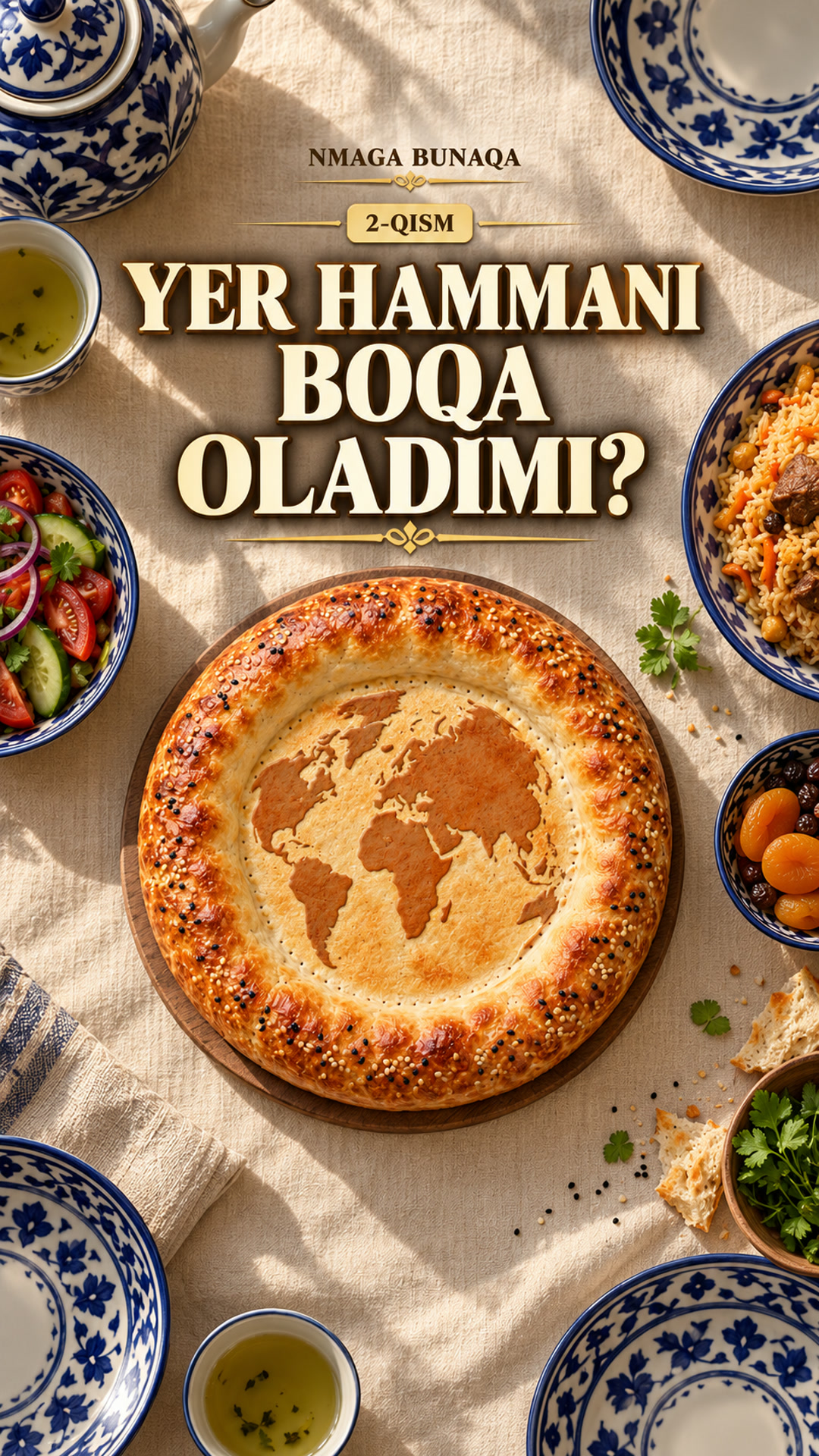
What does Earth’s annual bread budget represent?
Global Footprint Network’s 2026 accounts put humanity’s ecological demand at about 1.73 times annual biological regeneration, rounded to 1.7 in narration. Earth Overshoot Day is 30 July. The historical series recalculated in the same edition places 1972 on 31 December.
This is not a food-only or population-capacity calculation. The footprint covers cropland, grazing, fishing, forest products, built-up land and carbon uptake demand. Bread is a visual metaphor. Food does not run out on that date; it represents pressure on natural stocks and carbon accumulation. Compare historical dates within one accounts edition.
Average supply and actual plates
FAO food balances put global dietary energy supply in 2022 at 2985 kcal per person per day, rounded to about 3000 in narration. FAO’s 2026 estimate says about 645 million people, 7.8% of the population, faced chronic undernourishment in 2025.
2985 kcal is average availability, not what every person ate or could access. Income, prices, conflict and distribution matter. 645 million is an estimate of chronic undernourishment, not the same measure as acute food crises or all food insecurity.
One fifth of which food?
UNEP’s Food Waste Index 2024 estimates that 19% of food available to consumers in 2022 became waste at retail, food service and households. The film rounds this to one fifth. Producing food uses land, water and labour.
19% is not the share of all food produced. It includes edible and inedible parts at the consumer stages. It is distinct from post-harvest food loss. Reducing waste alone does not automatically feed everyone.
10.3 billion is a projection, not a limit
The central projection in UN World Population Prospects 2024 suggests world population may peak at around 10.3 billion in the mid-2080s. The film says “may”. Its conclusion connects efficient production, less waste, access and nature protection.
This is not Earth’s maximum feeding capacity or a guaranteed future. The film gives no reproductive instructions or country rankings. The closing phrase “Only Allah knows the exact number” expresses the author’s faith and humility, not statistical evidence.
How were images and maps made?
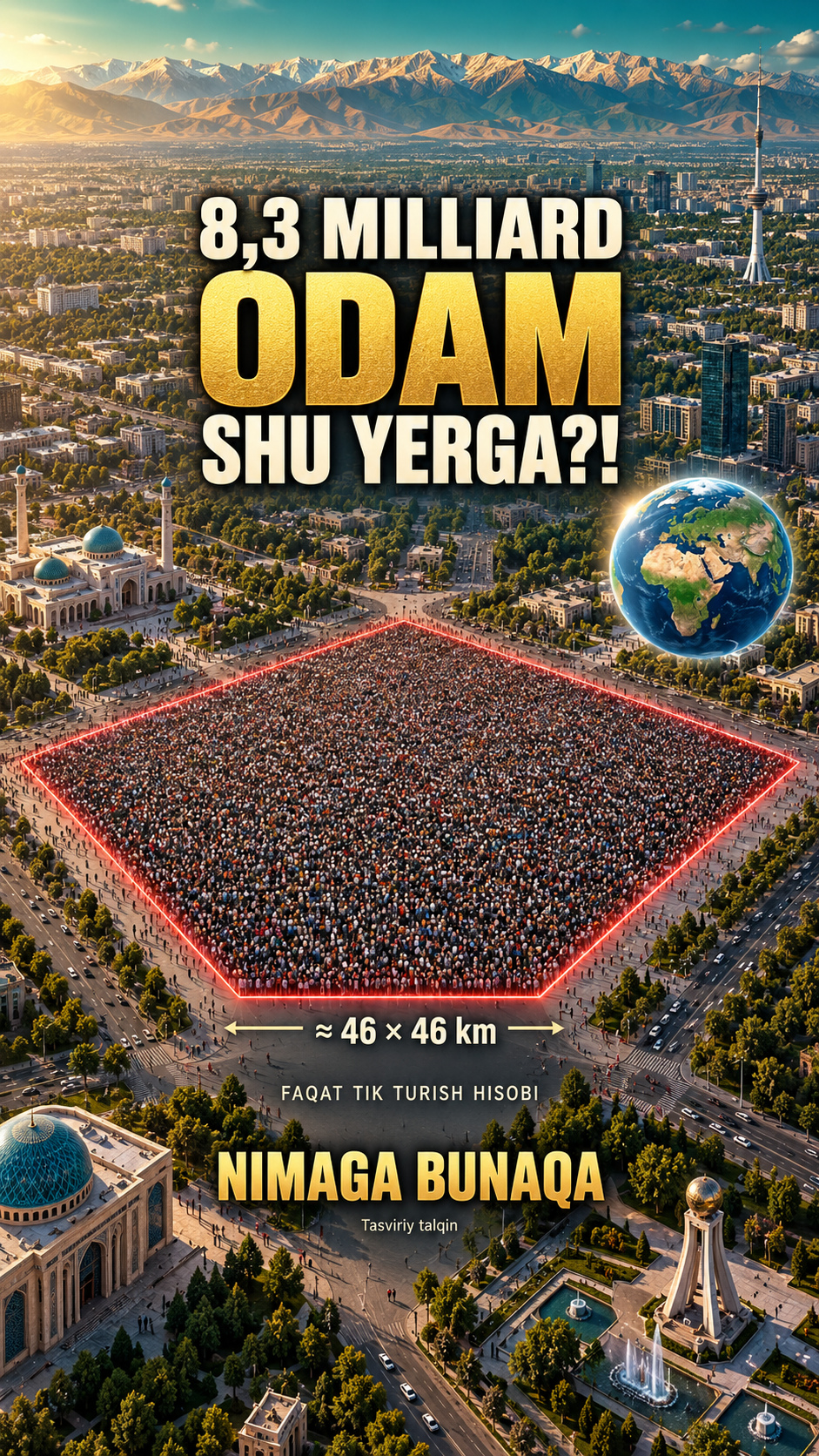
Bread, table, dishes and cover are AI artistic interpretations. The annual loaf is an explanatory instrument and the charts are schematic. The globe uses NOAA ETOPO relief, NASA Blue Marble appearance and Natural Earth geography.
The bread Earth is not a real satellite photograph. Food illustrations do not document anyone’s actual diet. Graphic sizes must not be converted into population or food capacity.
Music and rights
Investigations by Kevin MacLeod (incompetech.com), Creative Commons BY 4.0. Edited and mixed under the narration. Cinzel and Cormorant Garamond fonts use the SIL Open Font License.
This page matches film-v3. FAO and Global Footprint Network’s 2026 pages were rechecked on 9 October 2026. Subsequent corrections will include a date.
About the materials
Images and cover: AI artistic interpretation. Relief: NOAA NCEI ETOPO 2022, CC0. Globe: NASA Blue Marble. Boundaries: Natural Earth, public domain. Cinzel and Cormorant Garamond: SIL OFL. Investigations by Kevin MacLeod (incompetech.com), CC BY 4.0; edited and mixed.
Music
Found an error?
If you find a specific error or a better source, send us the claim and its link. We will review it and date any correction on this page.
Write to us on Instagram