On this page
Three key points
12,000 was an Indus count including servants.
100,000 and about 1,000 elephants are estimates reported by Babur.
The explanation combines defence, firepower and cavalry manoeuvre.
Where were the 12,000 counted?
Babur reports a count of 12,000 when crossing the Indus, including traders and servants. The film identifies that location and qualification.
This is not an exact count of 12,000 combatants at Panipat. Reinforcements and losses followed the crossing; the battle-day total is uncertain. Beveridge: pages 452 and 480.
100,000 and about 1,000 elephants: reported estimates
Babur reports an estimate of 100,000 opponents and says Ibrahim and his amirs were said to possess about 1,000 elephants. The film labels the figures as estimates.
These are not independent counts. The account does not establish that all those elephants stood in the battle line. On-screen figures are symbolic, not a unit-by-unit census.
700 carts: raw-hide ropes, not chains
The Baburnama describes 700 carts joined in Ottoman fashion, using raw-hide ropes instead of chains. Panipat town protected the right, while ditches and branches protected the left.
This does not mean 700 cannon or gun-carriages. Shields, exits and troop spacing are schematic; some small figures differ among translations.
Seven or eight days, then Friday morning
Babur records seven or eight days without an enemy attack after reaching Panipat. On Friday morning he received news that Ibrahim’s army was advancing in battle order.
The film gives only 1526 and Friday morning. Modern works differ on the April calendar date; this page does not silently introduce one disputed date as certain.
Cannon, shooters and turning wings
The account describes the enemy front halting, turning cavalry parties shooting from the rear, and the guns of Ustad Ali Quli and Mustafa firing. The film connects these movements in one schematic.
Turning movements, defence and firepower are explained together. Victory is not attributed solely to cannon. This is not an exact reconstruction of projectile paths, weapon counts or elephant panic.
The outcome: Delhi and Agra
Babur describes the battle ending within half a day and Ibrahim’s death. Subsequent events brought Delhi and Agra under his control and laid the foundations of Mughal rule.
The short does not reduce a complex campaign to a single cause. It does not imply that all India was conquered in one day or without further resistance.
Historical images and the AI cover
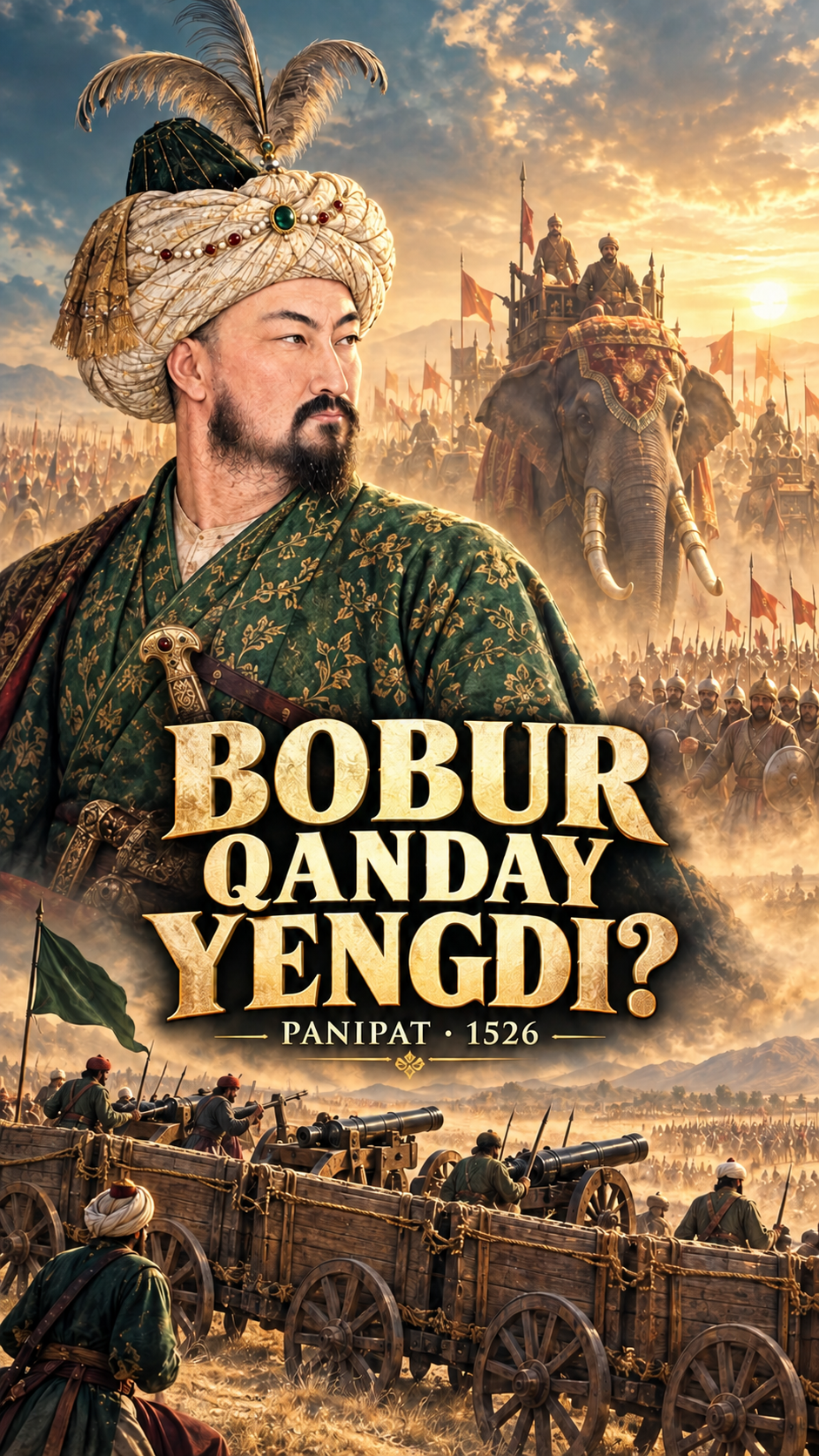
The Babur portrait is an idealized image from about 1605–1615 held by the British Museum. The preparation assets also include a 1598 Baburnama miniature and Khalili MSS 874 dynastic portraits from about 1707–1712; these links preserve their provenance.
These are not photographs of the 1526 battle or Babur’s appearance that day. The AI-assisted cover is an artistic reconstruction: costume, flag, elephants and cannon are symbolic, not asserted as exact historical appearances.
Maps and battle movements are schematic
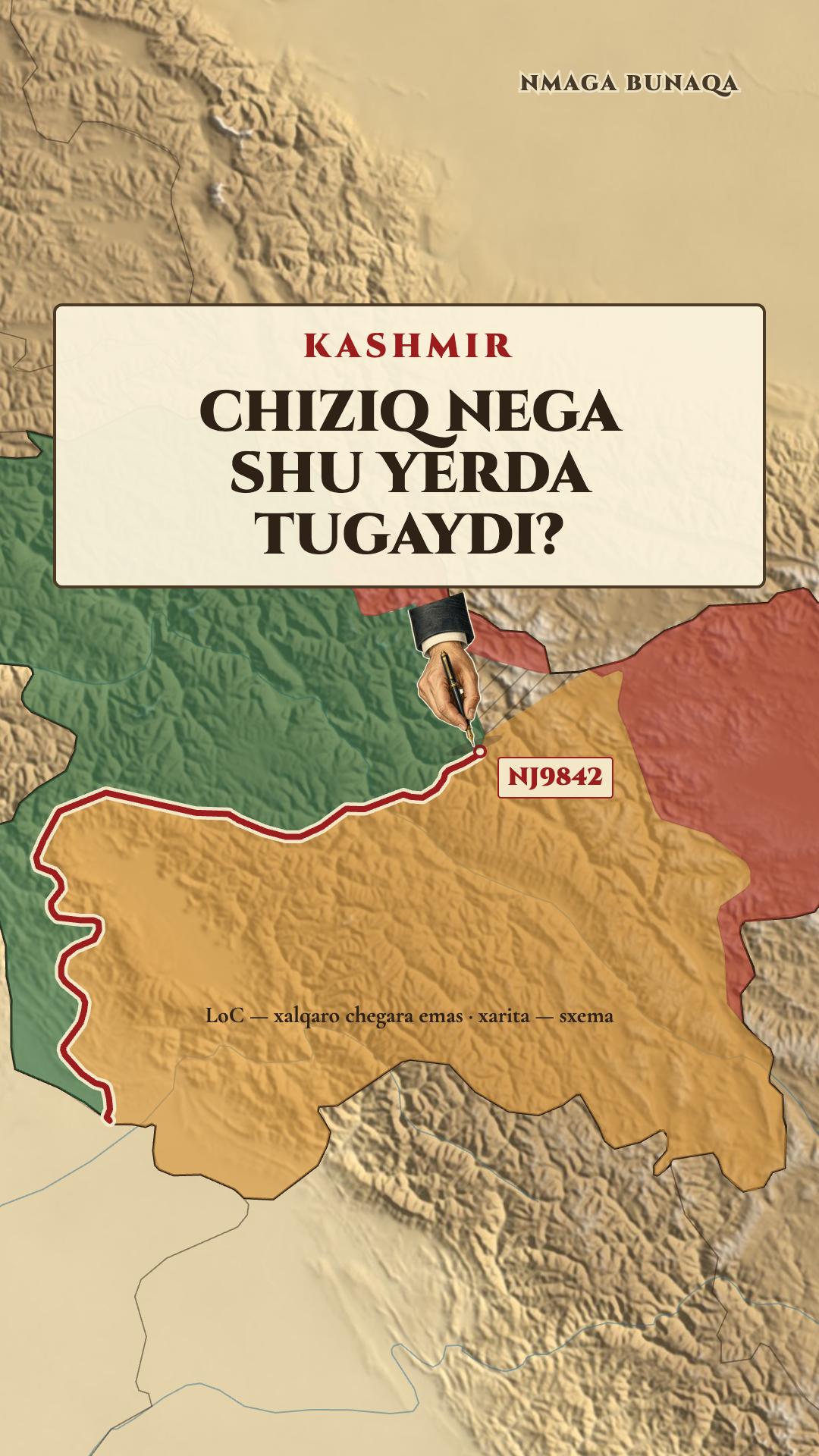
Relief is based on NOAA ETOPO 2022; general land and river geometry comes from Natural Earth. Cities, route and battlefield movements are redrawn for explanation.
Modern geodata is not a historical front-line survey. Symbols do not equal individual soldiers; city positions, crossing point, formation width and route lines are approximate. Modern boundaries do not establish historical sovereignty.
Voice, effects and fonts
Synthetic narration is used. This cut has no music. Ambience and battle effects are illustrative sound design, not historical field recordings. Cinzel, Cormorant Garamond and Cormorant in the closing panel use the SIL Open Font License.
A separate copy for 28 October 2026 adds a small NMAGA BUNAQA mark and a follow invitation after the story payoff. Original v7 is preserved; speech, effects, timing and the compressed audio stream are unchanged.
About the materials
The Babur portrait is an idealized image from about 1605–1615 held by the British Museum. The preparation assets also include a 1598 Baburnama miniature and Khalili MSS 874 dynastic portraits from about 1707–1712; these links preserve their provenance.
These are not photographs of the 1526 battle or Babur’s appearance that day. The AI-assisted cover is an artistic reconstruction: costume, flag, elephants and cannon are symbolic, not asserted as exact historical appearances.
Relief is based on NOAA ETOPO 2022; general land and river geometry comes from Natural Earth. Cities, route and battlefield movements are redrawn for explanation.
Modern geodata is not a historical front-line survey. Symbols do not equal individual soldiers; city positions, crossing point, formation width and route lines are approximate. Modern boundaries do not establish historical sovereignty.
Synthetic narration is used. This cut has no music. Ambience and battle effects are illustrative sound design, not historical field recordings. Cinzel, Cormorant Garamond and Cormorant in the closing panel use the SIL Open Font License.
A separate copy for 28 October 2026 adds a small NMAGA BUNAQA mark and a follow invitation after the story payoff. Original v7 is preserved; speech, effects, timing and the compressed audio stream are unchanged.
Found an error?
If you find a specific error or a better source, send us the claim and its link. We will review it and date any correction on this page.
Write to us on Instagram