On this page
Three key points
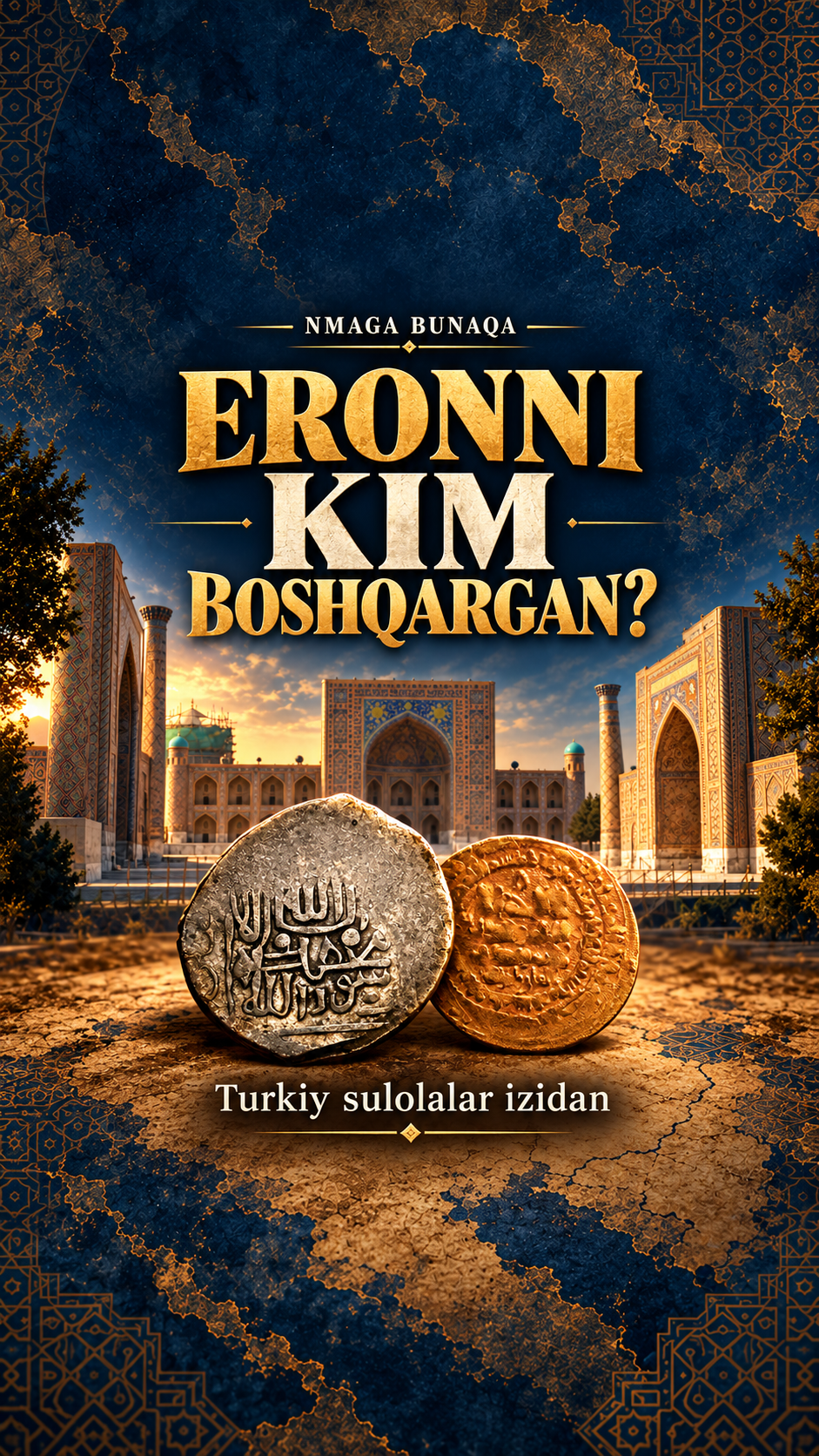
Registan patrons are identified precisely: Ulugh Beg and Yalangtush Bahadur.
Turkic and Turkmen dynasties ruled Iranian lands across centuries, but not as one uninterrupted, unchanging state.
Persian language and culture developed within those states; maps are approximate historical reconstructions.
Who commissioned the Registan monuments?
Ulugh Beg Madrasa was commissioned by Ulugh Beg in 1417–1420; Sher-Dor was commissioned in the seventeenth century by Yalangtush Bahadur, the ruler of Samarkand. The film says “commissioned”, not that the rulers laid the bricks themselves.
The ensemble took shape over centuries through many craftspeople. “Our heritage” expresses its place in present-day Uzbekistan and Turkic cultural memory; it does not deny other influences.
From the Seljuks to the Khwarazmshahs
The Seljuk victory at Dandanaqan in 1040 opened Khorasan to them; expansion deeper into Iran followed. The Anushteginid line was of Turkic origin, and Tekish defeated the last Seljuk sultan in 1194.
The film does not claim that all modern Iran was conquered in 1040. Mongol conquest followed the Khwarazmshahs, so there is no claim of uninterrupted rule.
Timurids and Turkmen dynasties
In later centuries the Timurids, Qara Qoyunlu and Aq Qoyunlu ruled different parts of Iranian lands. Their courts, territories and periods were not identical.
The film shows approximate snapshots for selected years, not one unchanged state or an ethnic border. Timur’s descendants and the Turkmen confederations were distinct historical formations.
Shah Ismail: Turkic poetry, careful classification
Shah Ismail wrote Turkic poetry under the pen name Khatai. An Iranica article records a 1535 copy of his divan kept in Tashkent.
Language alone does not prove a dynasty’s entire ancestry. Safavid origins are complex and debated; the film refers to Turkic language and a Turkmen Qizilbash environment, not an exclusively Turkic ethnic identity.
Afshars, Qajars and 1925
Nader Shah was of Afshar Turkmen origin. The Qajars also had Turkmen tribal roots; the dynasty was deposed on 31 October 1925.
Starting dates vary depending on rise, accession or coronation. The film uses dates for orientation and does not give an exact total or claim uninterrupted rule.
Gawhar Shad and Persian culture
Timurid Gawhar Shad commissioned a mosque in Mashhad; the architect was Qavam al-Din Shirazi. It illustrates Turkic rulers, Persian culture and Iranian craftspeople existing within the same history.
“Turkic dynasty” does not mean Persian language or Iranian culture disappeared. The film does not equate a ruling house with the population’s ethnicity.
How were the historical maps made?
Territories were selected from the open Cliopatria / Seshat historical dataset and reprojected onto the film map. Each map belongs to a selected year and is labelled “APPROXIMATE TERRITORY”.
Polygons may include dependent territories. They are not ethnic borders or modern ownership claims. Modern Iran is a reference outline; campaign paths are schematic.
Image and coin credits
Registan, Gawhar Shad Mosque, Shah Ismail’s divan and historical coins come from open-licence or public-domain sources; they were cropped, framed or animated.
Coins are historical evidence for rulers, not proof of every border. No endorsement by image creators is implied. Drawn figures are AI-assisted artistic interpretations, not portraits or archival footage.
Music, narration and fonts
Music: “Desert City” by Kevin MacLeod (incompetech.com), CC BY 4.0; edited to length and reduced beneath narration. Synthetic narration is used.
Effects are not historical recordings. Cinzel and Cormorant use the SIL Open Font License. The cover and drawn scenes are AI-assisted artistic interpretations.
About the materials
Registan, Gawhar Shad Mosque, Shah Ismail’s divan and historical coins come from open-licence or public-domain sources; they were cropped, framed or animated.
Coins are historical evidence for rulers, not proof of every border. No endorsement by image creators is implied. Drawn figures are AI-assisted artistic interpretations, not portraits or archival footage.
Music: “Desert City” by Kevin MacLeod (incompetech.com), CC BY 4.0; edited to length and reduced beneath narration. Synthetic narration is used.
Effects are not historical recordings. Cinzel and Cormorant use the SIL Open Font License. The cover and drawn scenes are AI-assisted artistic interpretations.
Found an error?
If you find a specific error or a better source, send us the claim and its link. We will review it and date any correction on this page.
Write to us on Instagram