On this page
Three key points
Physical location did not confer independent launch authority.
Test-site closure and warhead removal are separate events.
Weapons left; the legacy of testing remained.
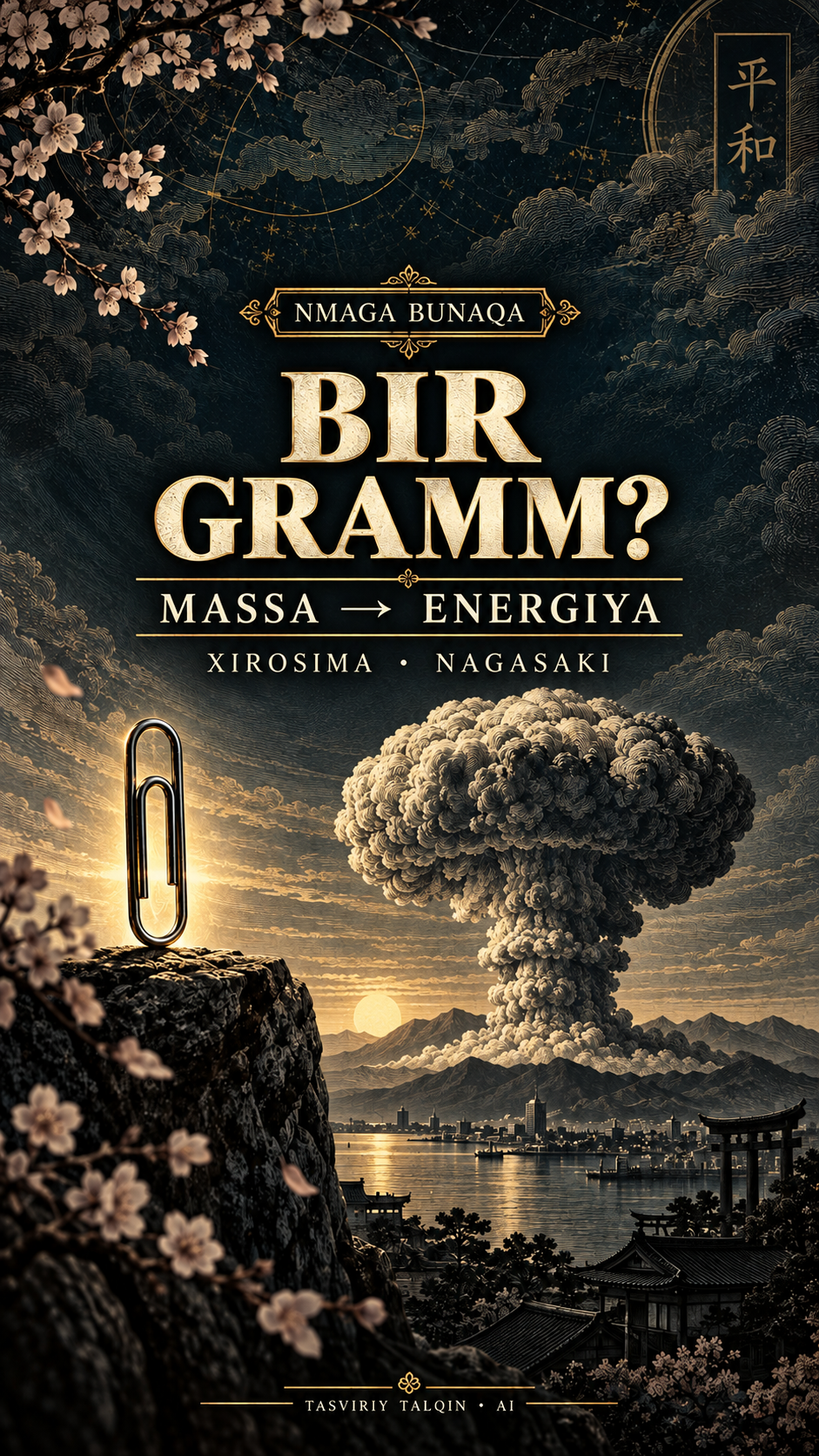
About 100 times Hiroshima’s yield
RDS-37 was tested at Semipalatinsk on 22 November 1955 with a yield of 1.6 megatons. Hiroshima’s Little Boy is estimated at about 15 kilotons. 1,600 ÷ 15 ≈ 107, rounded to 100 in the film.
This compares explosive energy, not cloud dimensions or casualties. The moving archive footage in the opening is the US Castle Bravo test of 1954, not footage of RDS-37. The Hiroshima photograph is by George R. Caron, 1945.
1,410 warheads and Moscow control
The 1991 strategic total includes missile and bomber weapons. The 1991 estimates are Britain 300, France 540 and China 435, totalling 1,275.
This compares counts, not military power or independent launch capability. Control was centred in Moscow.
Tests and their legacy
The first Soviet test was on 29 August 1949; 456 tests are counted for 1949–1989. The Chagan crater formed in the 15 January 1965 test. CTBTO documents the serious human impact.
Test totals depend on definitions. Chagan was not an operation to dispose of the 1991 arsenal.
Movement, agreements and 1995
Thousands joined Olzhas Suleimenov’s call in 1989. The site closed on 29 August 1991. Negotiations, security assurances and US assistance accompanied removal to Russia; the last warhead left in April 1995.
Site closure and warhead removal are separate events. Assurances do not imply automatic military intervention. The causal account is editorial synthesis.
Central Asia’s choice
Uzbekistan proposed the initiative at the UN in 1993. Five states signed the treaty in Semey on 8 September 2006; it entered into force on 21 March 2009.
Semey city and the test area are distinct. A weapon-free zone is not radiation-free or a ban on peaceful nuclear energy.
Kazakhstan: maps and satellite imagery
Chagan comparison: CORONA, 15 September 1964 and 28 June 1968; Sentinel-2, 18 June 2025. Test field: KH-7, 30 May 1965.
Historical imagery uses SpaceFromSpace processing, CC BY 4.0. Cropped and approximately registered; not a geodetic survey. Pins indicate areas; arrows are schematic.
Photograph and footage credits
R-36M: Vadim Tolbatov, CC BY-SA 4.0. Tu-95 (1984): US Navy, public domain. Suleimenov (2011): Ivan Bessedin, CC BY 2.0. Memorial (2013): Ivan Bykov, CC BY 3.0. Test site and Balapan (2012): Carl Willis, CC BY 3.0. Tu-95MS footage (2020): Mil.ru, CC BY 4.0.
Cropped, resized and colour adjusted; footage muted. Aircraft and museum images illustrate types, not the Kazakh arsenal in 1991. Image derivatives retain their original licences.
Cover, sound design and fonts
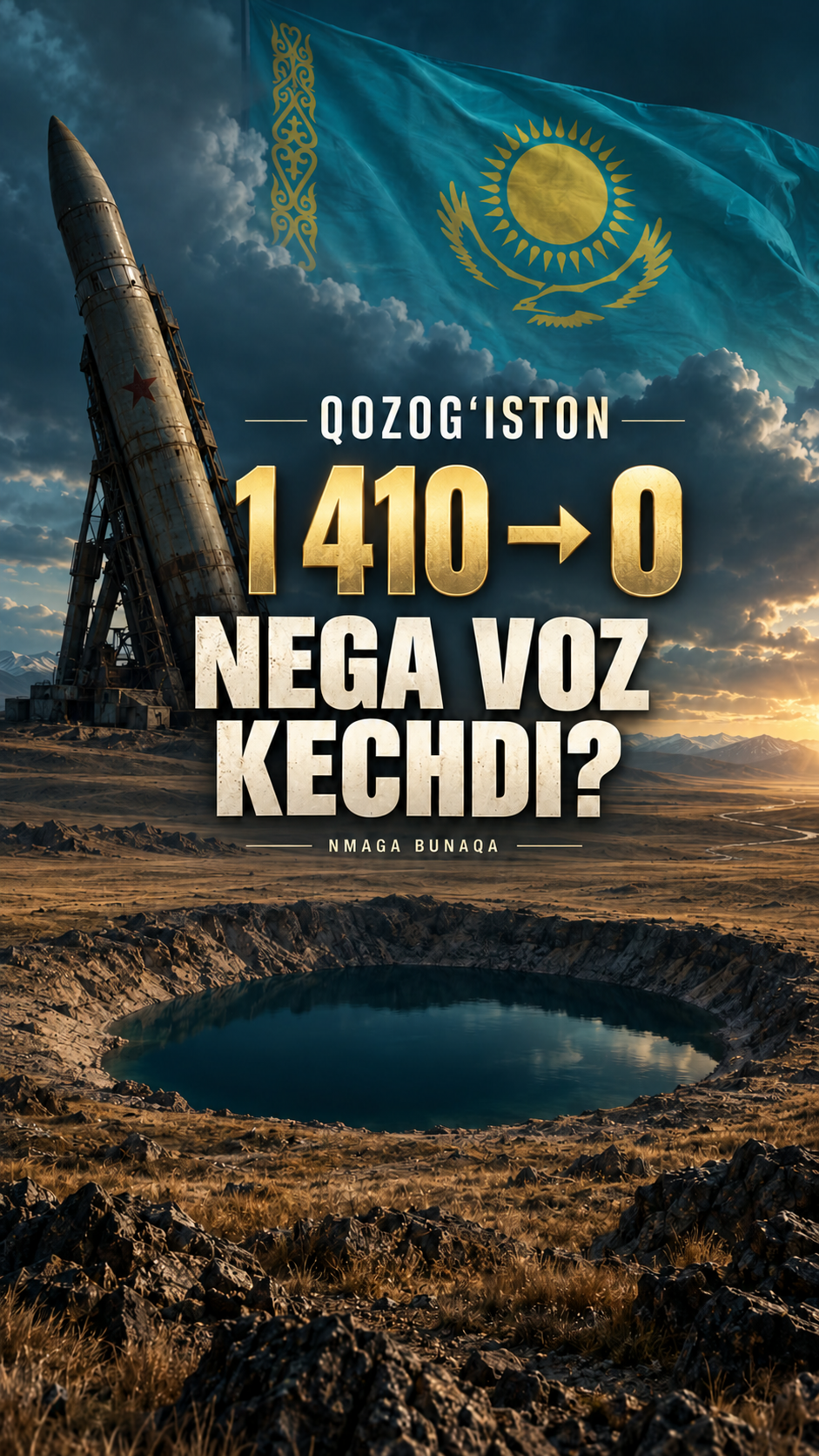
The cover is an AI editorial illustration, not an archive photograph or measured Chagan reconstruction. The selected main v6 uses studio ambience and effects, with no external music track. Synthetic narration is used.
Geiger-like clicks are sound design, not radiation readings. One cover missile does not mean all 1,410 warheads were missile-mounted.
About the materials
Contains modified Copernicus Sentinel data (2025). Sentinel-2 cloudless by EOX (2016–2017), CC BY 4.0.
Historical imagery: USGS EROS / NARA, processed by SpaceFromSpace, CC BY 4.0. Cropped and approximately registered.
Found an error?
If you find a specific error or a better source, send us the claim and its link. We will review it and date any correction on this page.
Write to us on Instagram