On this page
Three key points
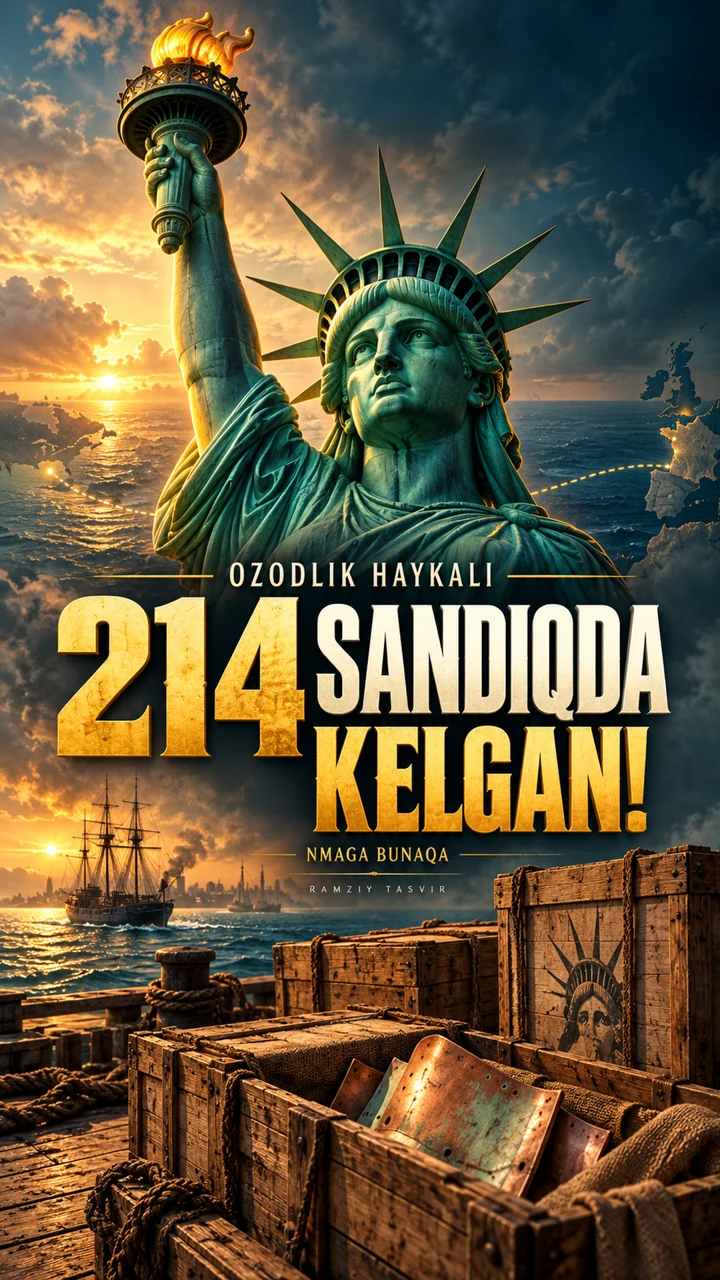
The statue was made in France and shipped to America in 214 crates.
Small donations also helped complete the pedestal in America.
The green colour is not paint: it is patina on the copper surface.
From France in 214 crates
The statue was made in France, assembled in Paris and then dismantled. In 1885 it arrived in New York aboard the Isère in 214 wooden crates. France was responsible for the statue; America for its pedestal.
214 is the total number of crates. Animated crates and the route are symbolic; the statue did not cross the ocean standing upright. The gift was planned for the centennial, but the dedication was not in 1876.
Bartholdi, Eiffel and small contributions
Sculptor Frédéric Auguste Bartholdi created the statue; Gustave Eiffel designed its internal iron supports. Joseph Pulitzer’s newspaper The World spread an appeal for pedestal donations and printed almost every donor’s name, however small the contribution.
Pulitzer’s campaign helped complete the pedestal alongside earlier fundraising. It did not finance the entire monument alone. Amounts in the newspaper mock-up are examples, not a historical donor list.
The 1886 dedication and green copper
The statue was dedicated on 28 October 1886. Its exterior is copper: over time a green patina formed on the surface. This layer helps protect the metal underneath.
The green colour is not paint and did not appear instantly. Present-day island names orient the viewer; they do not reproduce the names used in 1885.
Images, maps and reconstruction
The film uses an NPS photograph, historical workshop and pedestal photographs, an 1886 engraving and period paintings. Portraits identify the people. The links below lead to records of the actual materials used.
Paintings are not presented as photographs. Pulitzer’s portrait dates from around 1904. Drawn ships, crates, lifting equipment, the statue illustration and cover are symbolic. The modern torch silhouette is not a measured reconstruction of the 1886 torch.
About the materials
Rights records for historical materials are in the collection entries above. The NPS materials and selected historical scans are public-domain materials.
Map: Natural Earth 1:50m, public domain (via world-atlas).
Original animation and effects: Nmaga Bunaqa. Fonts: Barlow, Cinzel and Cormorant — SIL OFL. Statue illustration and cover: symbolic imagery made with AI.
Music
Found an error?
If you find a specific error or a better source, send us the claim and its link. We will review it and date any correction on this page.
Write to us on Instagram